

Japanese Walking for Weight Loss: How the 3-Minute Method Works
Walking is the easiest exercise there is. You don’t need a gym, special shoes, or a coach. But if you’ve walked every day and still feel stuck, you’re not alone. Your body gets used to the same pace, and the same walk stops giving you much.
That’s where Japanese walking comes in. It’s a simple trick: you switch between fast walking and slow walking. That’s it. In this guide, I’ll explain how it works, how to start, and what it can (and can’t) do for weight loss.
What Is Japanese Walking?
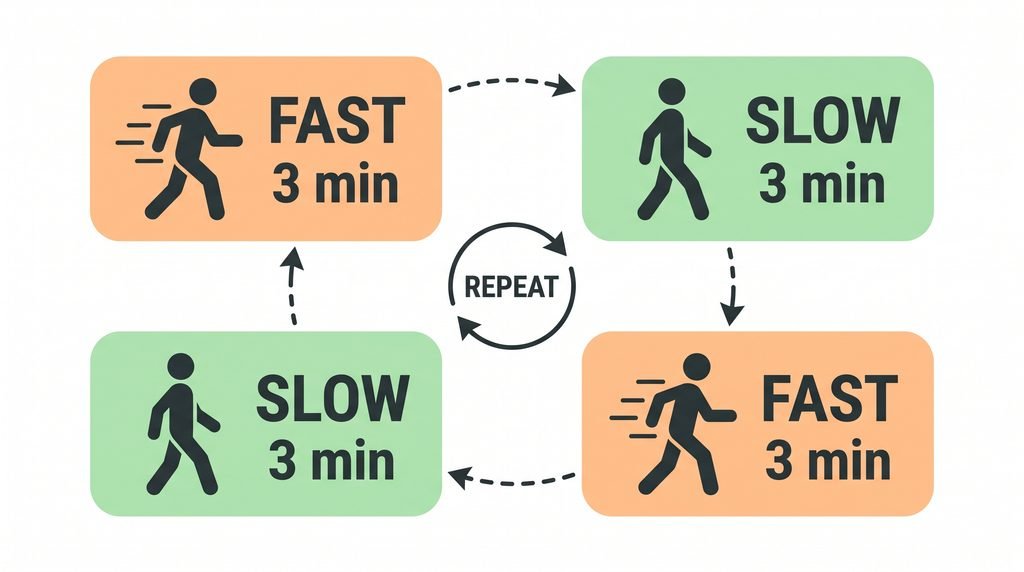
Japanese walking has a more serious name: interval walking training, or IWT. Instead of walking at one speed the whole time, you take turns. You walk fast for three minutes. Then you walk slowly for three minutes. Then you repeat.
Think of it like a game of tag. You sprint, then you catch your breath, then you sprint again. Your body works hard for a bit, then gets a short rest. That mix is what makes it different from a normal stroll. According to this overview of interval walking training, it borrows ideas from high-intensity interval training (HIIT) but keeps things gentle on your joints.
Where Did It Come From?
The method was created by scientists at Shinshu University in Japan. The team was led by Professor Hiroshi Nose and Dr. Shizue Masuki. They wanted a way for older adults to get fit without hard gym workouts.
Here’s a fun fact. The name “Japanese walking” mostly took off on social media. Dr. Masuki has said the method isn’t actually more popular in Japan than anywhere else, as this explainer points out. The name just tells you where the research began.
How to Do Japanese Walking, Step by Step
Here’s the simple version you can try today:
- Warm up for 3 minutes. Walk at an easy pace.
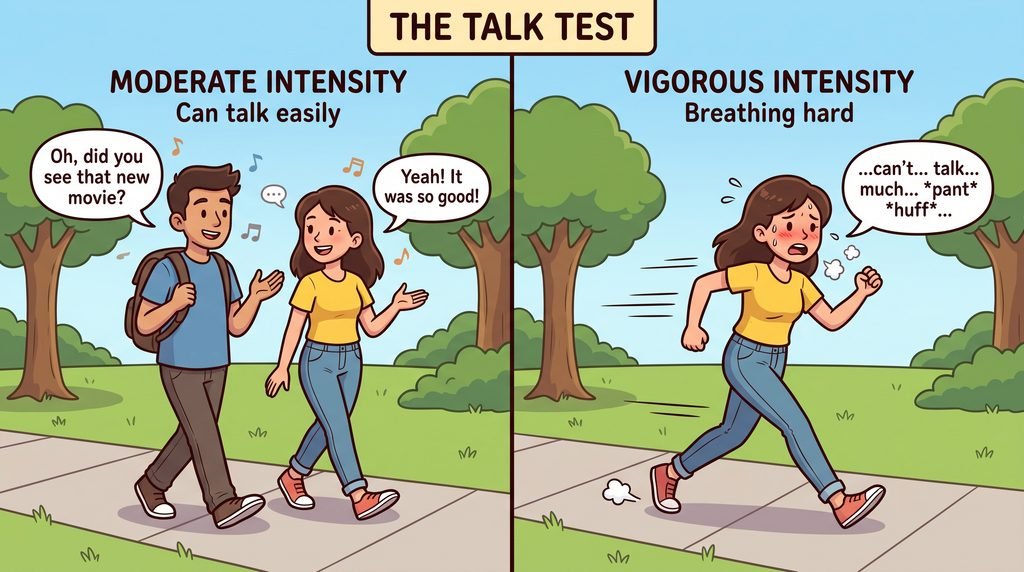
- Walk fast for 3 minutes. Go quick enough that talking feels hard. You should be able to say a few words, but not sing a song.
- Walk slow for 3 minutes. Slow down until you can chat easily again.
- Repeat. Do the fast-slow pattern five times. That’s about 30 minutes total.
- Cool down. Finish with a couple of minutes of easy walking.
In the original research, the fast part was about 70% of a person’s top effort, and the slow part was about 40%, as McKnight’s reported. You don’t need a lab to guess this. Use the “talk test.” Slow walking lets you chat. Fast walking makes chatting hard. Researchers have described it the same way, as noted by the Women’s Brain Health Initiative.
What Does the Research Say?
The big study came out in 2007 in a journal called Mayo Clinic Proceedings. You can find the original paper here. About 246 people, with an average age of 63, joined for five months. They were split into groups: one did no training, one did regular steady walking, and one did interval walking.
The interval walkers did better. HealthDay reported that their leg strength went up by 13 to 17 percent, their fitness improved by about 8 to 9 percent, and their blood pressure dropped more than the steady walkers.
A later study in 2019 looked at about 679 people. It found that just 50 minutes a week of fast walking was enough to see real gains, according to ScienceDaily. Fitness went up 14%, and signs of lifestyle-related disease went down 17%.
So, Does It Help You Lose Weight?
Let me be honest with you here, because this part matters.
The famous studies mostly measured fitness, strength, and blood pressure. They did not promise big drops on the scale. So if someone tells you Japanese walking will melt 10 kilos in a month, don’t believe them.
But it can still help with weight loss in real ways:
- It uses more energy. Fast walking makes your body work harder than a slow stroll, so you burn more energy in the same amount of time.
- It builds leg muscle. Stronger muscles help your body move better and stay active.
- It’s easy to stick with. The best exercise is the one you keep doing. Many people find the changing pace less boring than one long walk.
- It’s low impact. Running can hurt the knees. This is much kinder.
Weight loss still comes down to a simple idea: you need to use more energy than you eat. Walking helps with the “use” side. Food helps with the “eat” side. Walking alone, without any changes to eating, may give you slow results.
A Simple 4-Week Plan for Beginners
Don’t jump in too fast. Build up slowly.
- Week 1: 3 sessions. Do 3 sets of fast/slow (about 18 minutes).
- Week 2: 3 or 4 sessions. Do 4 sets (about 24 minutes).
- Week 3: 4 sessions. Do 5 sets (about 30 minutes).
- Week 4: 4 sessions. Keep 5 sets and try to walk a little faster in the fast part.
The 2019 research suggests that the total time you spend walking fast is the key, not how long the whole walk is. So even a short session counts, as long as the fast parts feel properly fast.
Tips to Make It Easier
- Use a timer. Your phone’s stopwatch works fine. Set it to beep every three minutes.
- Wear comfy shoes. Good shoes protect your feet and knees.
- Swing your arms. It helps you move faster and feels natural.
- Stand tall. Keep your head up and shoulders relaxed.
- Drink water. Especially on hot days.
- Pick music with a beat. It makes the fast parts more fun.
Common Mistakes
Going too fast too soon. Your fast pace should be hard, but not painful. Don’t push until you feel dizzy.
Not slowing down enough. The slow part is part of the plan. It lets your body rest so you can go hard again.
Expecting magic. Real change takes weeks. Stay patient and keep going.
Skipping food habits. You can’t out-walk a very high-calorie diet.
Who Should Be Careful?
Japanese walking is gentle, but it’s still real exercise. If you have heart problems, high blood pressure, joint pain, or any health condition, talk to your doctor first. The same goes if you’re pregnant or have been inactive for a long time. If you ever feel chest pain, dizziness, or trouble breathing, stop right away.
Frequently Asked Questions
How often should I do Japanese walking?
Many people aim for 3 to 4 times a week. Start with what feels doable, then build up.
Do I need an app?
No. A phone timer is enough. Researchers did build an app for interval walking in Japan, but it’s currently only in Japanese.
Is it better than regular walking?
For fitness, leg strength, and blood pressure, the research found that it beat steady walking. For weight loss, it can help, but food choices matter just as much.