Hard Workout? 8 Tips to Recover Faster and Feel Better
Introduction
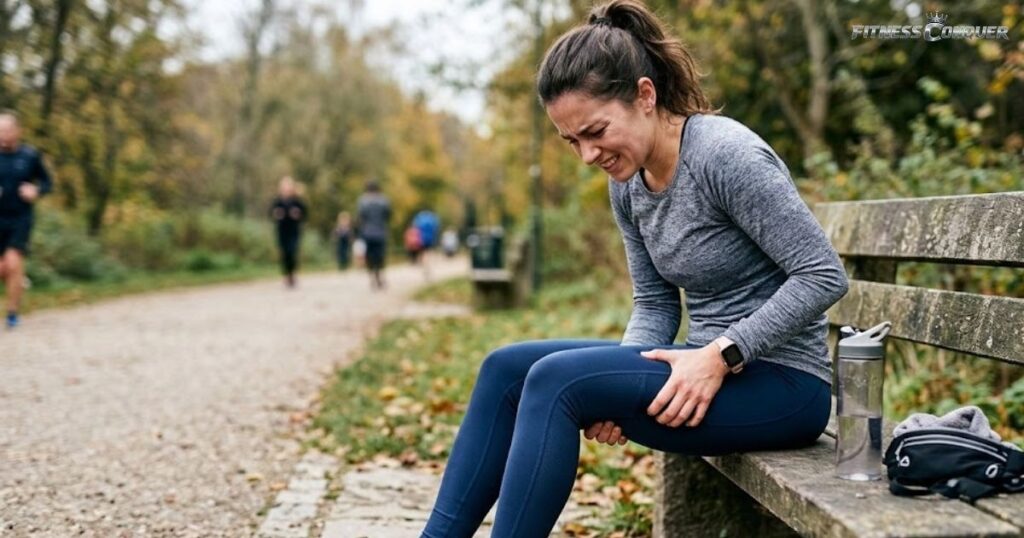
After a hard workout, your body needs time to recover. Many people think exercise alone makes them stronger. However, that is not true. Your muscles actually grow and repair when your body rests and heals.
If you do not recover properly, you may feel tired, sore, and unmotivated. Moreover, poor recovery can increase the risk of injuries and slow your fitness progress.
The good news is that simple habits can help your body recover faster and feel better. In this guide, you will learn easy and practical tips to help your body recover after workouts and stay strong.
- The Problem: Why Many People Struggle to Recover
- The Solution: Simple Ways to Recover Faster
- How Sleep Helps Your Body Recover Faster
- How Nutrition Helps Muscles Recover After Workouts
- Why Hydration Is Important to Recover
- How Active Recovery Can Reduce Muscle Soreness
- Step-by-Step Guide to Recover After a Hard Workout
- Common Mistakes People Make When Trying to Recover
- Recovery: Why It Is the Secret to Better Fitness
- FAQs About Workout Recovery
- Conclusion
The Problem: Why Many People Struggle to Recover
Many people push their bodies very hard in the gym. They do intense workouts, lift heavy weights, and train almost every day. However, they forget one important thing: proper recovery.
Without enough recovery time, your muscles stay tired and stressed. As a result, you may experience:
- Muscle soreness that lasts for days
- Low energy levels
- Poor workout performance
- Trouble sleeping
- Higher risk of injury
In addition, some people skip rest days, drink very little water, or eat unhealthy food after workouts. These habits make it harder for the body to recover.
Therefore, learning how to recover properly is just as important as the workout itself.
The Solution: Simple Ways to Recover Faster
The solution is simple. You must support your body after every workout. Good recovery habits help your muscles repair, reduce soreness, and improve your next workout.
These habits include:
- Sleeping enough
- Eating the right foods
- Drinking plenty of water
- Stretching your muscles
- Taking proper rest days
When you follow these recovery strategies, your body becomes stronger, healthier, and more energetic.
Now let us look at the best ways to recover faster after a hard workout.
How Sleep Helps Your Body Recover Faster

Sleep is one of the most powerful ways to help your body recover. When you sleep, your body repairs damaged muscles and restores energy.
During deep sleep, your body releases growth hormones. These hormones help muscles heal and grow stronger.
For better recovery, try these tips:
- Sleep 7–9 hours every night
- Go to bed at the same time daily
- Avoid phones before bedtime
- Keep your room dark and quiet
For example, athletes who sleep well often perform better in training. However, people who sleep only 4–5 hours may feel tired and weak during workouts.
Therefore, good sleep is essential if you want to recover faster.
How Nutrition Helps Muscles Recover After Workouts
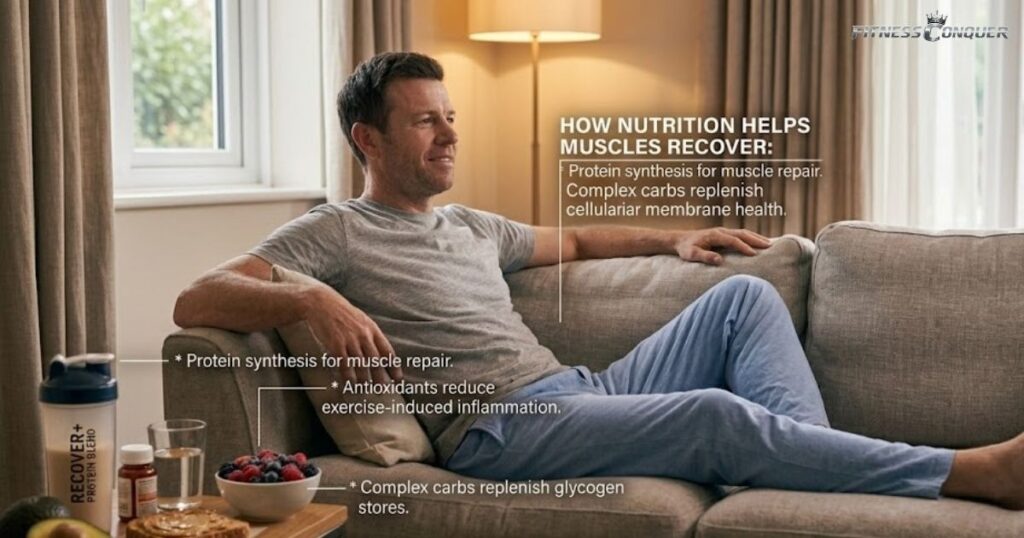
Food plays a huge role in helping your body recover. After exercise, your muscles need nutrients to repair themselves.
Protein is especially important. It helps rebuild muscle fibers that break down during workouts.
Good recovery foods include:
- Eggs
- Chicken or fish
- Greek yogurt
- Fruits and vegetables
- Whole grains
In addition, healthy carbohydrates help refill your energy stores. For example, eating rice, oats, or bananas after a workout helps your body recover faster.
Moreover, try to eat within 30–60 minutes after exercise. This helps your muscles repair quickly.
Why Hydration Is Important to Recover
Water is another key factor in helping your body recover. When you exercise, you lose fluids through sweat. If you do not drink enough water, your body may struggle to recover.
Proper hydration helps:
- Reduce muscle cramps
- Improve energy levels
- Support muscle repair
- Prevent fatigue
For example, many people feel dizzy or weak after a workout because they are dehydrated.
Therefore, drink water before, during, and after your workouts. In addition, sports drinks may help after very intense training sessions.
How Active Recovery Can Reduce Muscle Soreness
Active recovery means doing light movement instead of complete rest. This helps blood flow to your muscles and speeds up recovery.
Examples of active recovery include:
- Light walking
- Easy cycling
- Gentle yoga
- Stretching
These activities keep your body moving without stressing your muscles too much.
For instance, if you trained your legs heavily yesterday, a light walk today can help reduce soreness.
However, active recovery should stay easy and relaxed. The goal is to help your body recover, not to exhaust it again.
Step-by-Step Guide to Recover After a Hard Workout
Here is a simple step-by-step guide you can follow after every workout.
Step 1: Cool Down
After finishing your workout, spend 5–10 minutes walking slowly or stretching. This helps your heart rate return to normal.
Step 2: Drink Water
Rehydrate your body immediately. Drink water to replace fluids lost during exercise.
Step 3: Eat a Healthy Meal
Within one hour, eat a meal with protein and healthy carbs. For example, chicken with rice or eggs with toast.
Step 4: Stretch Your Muscles
Gentle stretching helps reduce stiffness and improves flexibility.
Step 5: Get Enough Sleep
Finally, allow your body to recover overnight with quality sleep.
Following these simple steps will help your body recover faster and prepare for your next workout.
Common Mistakes People Make When Trying to Recover
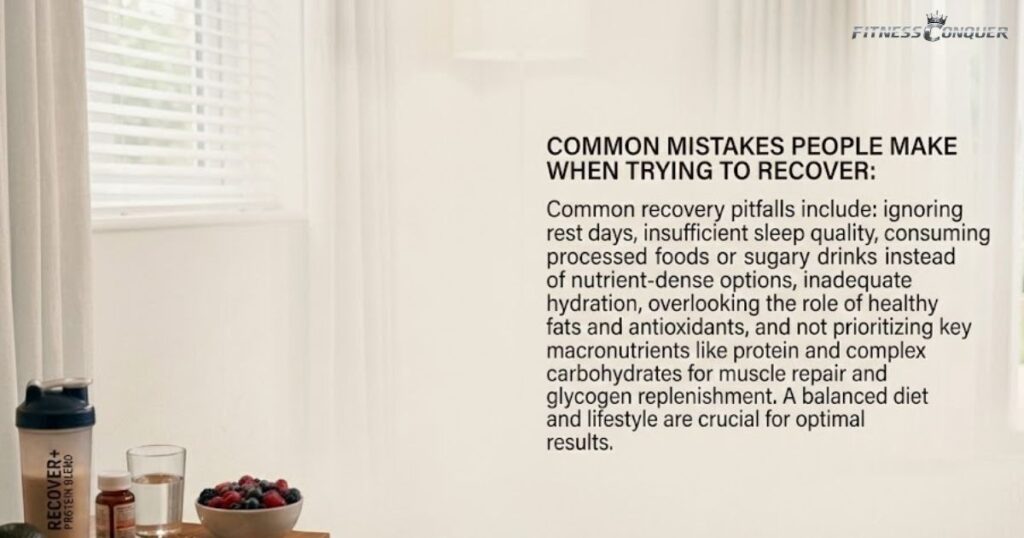
Many people want to recover quickly but make mistakes that slow the process.
Some common mistakes include:
- Skipping rest days
- Not eating enough protein
- Drinking very little water
- Overtraining every day
- Ignoring pain or injuries
For example, someone who trains hard every day without rest may feel constant muscle pain.
However, smart training includes proper recovery time. Therefore, always listen to your body and give it time to heal.
Recovery: Why It Is the Secret to Better Fitness
Recovery is often the most ignored part of fitness. However, it is one of the most important.
Your muscles do not grow during workouts. They grow when your body recovers afterward.
Good recovery leads to:
- Stronger muscles
- Better performance
- Less soreness
- Lower injury risk
- Higher energy levels
In addition, proper recovery keeps your workouts consistent. When your body feels good, you can train harder and improve faster.
FAQs About Workout Recovery
1. How long does it take muscles to recover after a workout?
Most muscles take 24–48 hours to recover after intense exercise. However, recovery time depends on workout intensity and your fitness level.
2. What helps muscles recover faster?
Sleep, proper nutrition, hydration, and light activity help the body recover faster. These habits support muscle repair and reduce soreness.
3. Is rest necessary to recover after workouts?
Yes. Rest days allow your muscles to repair and rebuild. Without rest, your body may struggle to recover and performance may decrease.
4. Can stretching help muscles recover?
Yes. Gentle stretching improves blood flow and reduces muscle stiffness. Therefore, it can help your body recover more comfortably.
5. What should I eat to recover after exercise?
Foods rich in protein and healthy carbohydrates help muscles recover. Examples include eggs, chicken, yogurt, rice, and fruits.
Conclusion
Hard workouts are great for your body. However, your progress depends on how well you recover afterward. Without proper recovery, your muscles stay tired and your performance may suffer.
Simple habits like sleeping well, eating nutritious food, staying hydrated, and taking rest days can help your body recover faster and feel stronger.
Start applying these recovery tips today. Your body will feel better, your workouts will improve, and your fitness journey will become much more enjoyable.